Medical Excellence: Novelties in treatment methods and diagnostics

The German Heart Centre at Charité (DHZC)
visitBerlin – KI-generiert

Initiative Women's Hearts - Gender-Specific Cardiology

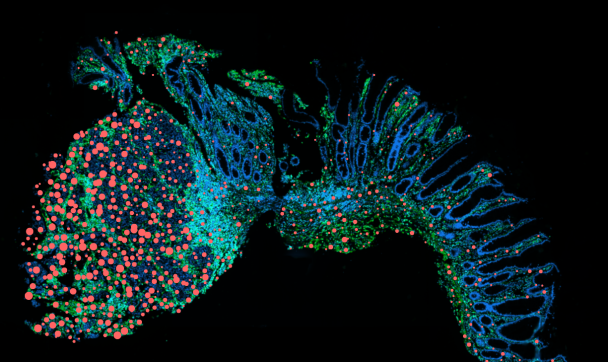
19.05.2026 ‒ The German Heart Centre at Charité (DHZC) is launching “Straight Talk: Women’s hearts”. The initiative explains gender-specific differences in cardiology and makes interdisciplinary care for female patients more visible. Cardiovascular care should take women’s specific risks, symptoms and life stages into account.

Heart disease is the leading cause of death among women, yet diagnosis and treatment often still follow male patterns. This can mean that conditions are diagnosed later in women. Symptoms may also differ from those experienced by men. Pregnancy complications, menopause and certain cancer therapies can also affect heart health.

The interdisciplinary care at the DHZC helps identify risks earlier and support long-term prevention. The specialists also cover high-risk pregnancies, pregnancy complications and cardiac follow-up after cancer treatment.
More
Evangelical Spandau Forest Hospital
csm_rosa-huefte-op-ewk

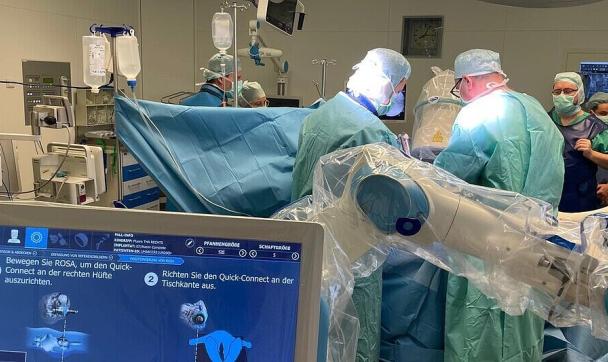
First ROSA-assisted hip replacement

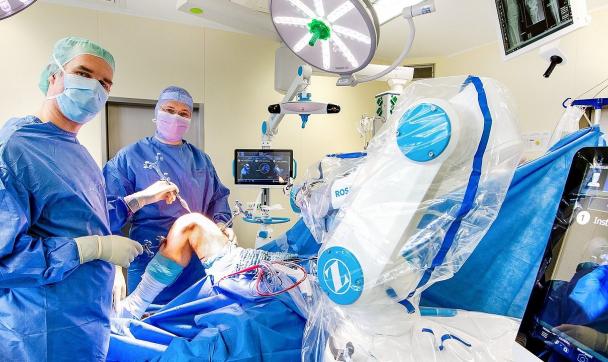
25.03.2026 ‒ A new milestone in hip surgery was reached at Evangelisches Waldkrankenhaus Spandau: For the first time in Germany and Austria, a hip replacement was performed using the ROSA (Robotic Surgical Assistant) system. The technology supports surgeons in planning the procedure and positioning the implant with greater precision.

For patients, this can offer several benefits: healthy tissue can be better protected, postoperative pain may be reduced, earlier mobilisation and faster rehabilitation can be supported, and the length of the hospital stay may be shortened.

The hospital already has extensive experience with ROSA. The system has been used there for knee surgery for almost six years, with more than 4,000 procedures performed. This makes the Spandau team one of the most experienced ROSA teams in Europe. Its use in hip surgery now expands the scope of robot-assisted orthopaedics and provides additional modern treatment options for patients in Berlin.

More
Charité Brain Organoid
HHU Stephanie Le, AG Prigione

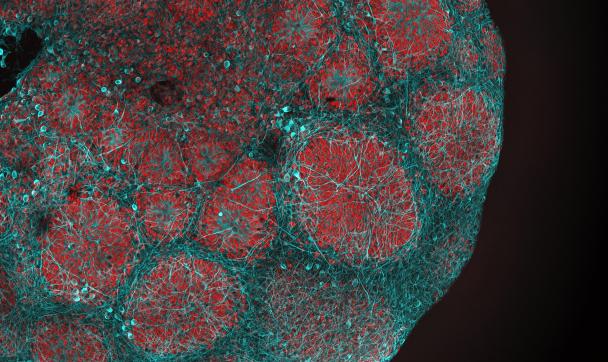
Charité investigates new potential treatment for Leigh syndrome

11.03.2026 – A research team led by Charité – Universitätsmedizin Berlin has identified a potential new treatment approach for the rare Leigh syndrome. The inherited metabolic disorder impairs the energy supply to the brain and muscles and can cause seizures, muscle weakness and developmental disorders from childhood. In a pilot study involving six patients, sildenafil – an active ingredient also known from Viagra – improved muscle strength in particular; in some cases, neurological symptoms and metabolic crises also decreased.

The research began with a screening of more than 5,500 existing compounds using nerve cells and brain organoids developed from patient cells. The initial findings now need to be confirmed in a larger, Europe-wide, placebo-controlled study. The EMA (European Medicines Agency) has already granted sildenafil orphan-drug designation for Leigh syndrome. The Berlin research demonstrates how existing medicines can be systematically investigated for new applications in rare diseases.

More
German Heart Center of Charité (DHZC)
visitBerlin – KI-generiert

Charité and DHZC establish new institute for medical AI

13.11.2025 – Charité – Universitätsmedizin Berlin and the German Heart Center of Charité (DHZC) have founded the Institute for Artificial Intelligence in Medicine (IKIM). Its goal is to systematically transfer AI applications from research into clinical practice and assess their benefits and safety in studies. The institute is headed by Prof. Alexander Meyer, who also holds the newly established professorship for Artificial Intelligence in Medicine.

IKIM develops AI systems for patient care, hospital management and research, while also investigating methods that make AI-based decisions transparent and understandable for physicians. Data scientists will work closely with clinical teams. Cooperation with the Berlin Institute for the Foundations of Learning and Data (BIFOLD) at TU Berlin and the digital model clinic currently being developed at DHZC will also play an important role. The new institute strengthens Berlin’s capacity to evaluate medical AI under real-world clinical conditions and support its responsible use.

More
Helios
visitBerlin – KI-generiert

New robotics technology enables more precise lung cancer diagnostics

16.10.2025 ‒ Helios Klinikum Emil von Behring in Berlin is now using a new robot-assisted procedure to investigate suspicious changes in the lungs. The Ion system supports physicians during bronchoscopy and makes it possible to reach even very small nodules or those located deep within the lung tissue in order to obtain tissue samples. This allows suspicious findings that were previously difficult to access with conventional endoscopic procedures to be examined more precisely. According to Helios, the procedure is associated with a lower risk of complications than previous methods, and several suspicious areas can be investigated during a single procedure. If lung cancer is confirmed, the next steps in treatment are determined individually by an interdisciplinary tumor board. 

More precise diagnostics can help provide clarity at an earlier stage and enable suitable treatment to begin sooner. With the system now in use at the certified lung cancer center of the Heckeshorn Lung Clinic at Helios Klinikum Emil von Behring, Berlin is further expanding its specialized services in modern pulmonary medicine.

More
New Heart Valve
DHZC Kai Abresch Fotografie

New heart valve developed in Berlin aims to reduce repeat surgeries

19.06.2025 – At the German Heart Center of Charité (DHZC), a new type of pulmonary valve prosthesis made from the patient’s own tissue has been implanted for the first time. Tissue from the pericardium is removed, shaped into valve leaflets and inserted into the heart via catheter – without open-heart surgery. Because the tissue is recognised by the immune system as the body’s own, the valve is intended to be more durable than conventional prostheses made from animal tissue. 

The approach could be particularly relevant for children with congenital heart defects: a future biodegradable stent is designed to allow the valve to adapt as the body grows, potentially reducing the need for repeat procedures. The technology is being tested for safety in a study, initially involving seven young adults. It was developed under the leadership of Prof. Felix Berger with a team led by PD Dr. Boris Schmitt at the DHZC and transferred to the Berlin start-up GrOwnValve. The project brings together paediatric cardiology, clinical research and medical technology in Berlin.

More
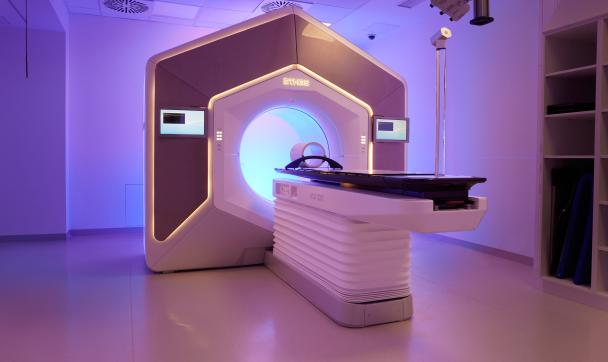
Adaptive Radiation Therapy Using the Ethos System
CFM Charité Michael Kleber

Adaptive Radiotherapy Enables More Precise Treatment

24.04.2024 – Charité – Universitätsmedizin Berlin has expanded its radiotherapy services with an AI-supported procedure that can adapt treatment each day to the patient’s current anatomy. Using the high-tech “Ethos” system, an integrated CT scanner determines the position and size of the tumor and nearby organs immediately before irradiation. Based on these images, the optimal distribution of the radiation dose is calculated and then reviewed by medical specialists.

As a result, the tumor can be targeted more precisely while surrounding healthy tissue is better protected. The approach is particularly relevant for tumors whose position may change due to movements of the bowel, stomach, or bladder. Charité is initially using adaptive radiotherapy for prostate cancer, with further tumor types expected to follow. Accompanying studies are investigating which patients benefit most from the procedure. With this new technology, Berlin is further expanding its range of personalized, highly precise cancer treatments.

More
robot assisted surgery at Helios, Berlin
Helios, photo: Thomas Oberländer

Robot-assisted knee surgery at Helios Klinikum Berlin-Buch

In 2021, Helios Klinikum Berlin-Buch introduced a semi-active robot called ROSA (Robotic Surgery Assistant) for knee joint surgeries and the insertion of an artificial knee joint (knee endoprosthesis). Since then the orthopaedics department headed by Prof. Dr. med. Daniel Kendoff is one of 15 clinics in Germany where these robot-assisted surgeries are possible. The use of this modern medical technology enables high-precision work and millimeter-precise insertion of the artificial knee joint. This is essential because a minimal misalignment of the prosthesis can potentially lead to permanent discomfort for the patient. With the robot, the sectional planes are clearly defined, while the instruments are manually handled by the surgeon. Pain and difficulties in moving the knee can thus be better avoided. More information about Helios can be found here.

More
Panorama Berlin with Reichstag and Charite
visitBerlin, photo: Stephan Zirwes

Charité Berlin Ranked Among the World’s Best Hospitals 2026

The U.S. magazine Newsweek, in cooperation with the global data and business intelligence platform Statista, has published the World’s Best Hospitals 2026 ranking. Once again, Charité – Universitätsmedizin Berlin is listed among the world’s leading hospitals: the research-based university hospital in Berlin ranks 8th worldwide, 2nd in Europe and 1st in Germany.

The ranking evaluates more than 2,500 hospitals worldwide and is based on international recommendations from medical experts, patient experience data and hospital quality metrics, including indicators related to treatment quality and hygiene.

More information about Charité – Universitätsmedizin Berlin can be found here.

More
Charité – Campus Virchow-Klinikum
Charité – Universitätsmedizin Berlin

Treatment of genetic obesity

In a study published in May 2018, researchers from the Institute for Experimental Pediatric Endocrinology of the Charité - Universitätsmedizin Berlin have successfully treated patients whose obesity is caused by a genetic defect. The research at Europe’s largest university hospital in cooperation with the Clinical Research Unit at the Berlin Institute of Health (BIH) could result in developing a new drug and, in the future, help patients with genetic obesity. More information about the Charité can be found here.

More
Main Entrance Helios Klinikum Berlin Buch
Thomas Oberländer | Helios Kliniken

Intraoperative Electron Radiation Therapy (IOERT)

Only a few hospitals in Germany use the innovative Intraoperative Electron Radiation Therapy (IOERT) in treating breast cancer. At Helios Klinikum Berlin-Buch the electron radiation is applied directly to the residual tumor during surgery, a treatment proving highly effective. One minute of electron radiation can spare patients weeks of conventional external radiation therapy. More information about the Helios Hospital Group can be found here.

More
exterior view DHZB German Heart Centre Berlin
Kai Abresch Fotografie

Baby undergoes successful heart surgery without donor blood

At just eleven days old, Lotte is probably the youngest patient ever to undergo successful heart surgery of such complexity without receiving blood from a donor. For the operation at the Deutsches Herzzentrum Berlin (DHZB), a heart-lung machine specially developed for newborns was used. For years, DHZB surgeons and paediatric cardiologists have been working on systems that do not require donor blood. This minimizes the risks of infection and intolerance, and allows patients to recover more quickly. The DHZB is currently the only heart centre worldwide to routinely use these systems. More information about the DHZB can be found here.

More
entrance to Charité Campus Mitte
Charité – Universitätsmedizin Berlin

Charité professor wins 2016 Berlin Science Award

Neuroscientist and stroke expert Professor Ulrich Dirnagl has received the 2016 Berlin Science Award. The accolade pays tribute to his numerous research contributions in the field of stroke research, cerebral blood flow and cerebral imaging. An internationally renowned scientist, he heads the Experimental Neurology department at the Charité – Universitätsmedizin Berlin and is the director of the Center for Stroke Research Berlin. The award is endowed with 40,000 euros. More information about the Charité can be found here.

More
Biobank
Photo: Berlin Institute of Health

New biobank provides foundation for outstanding research

Since December 2016, Berlin has had an ultra-modern biobank, giving the Charité – Universitätsmedizin Berlin and the Berlin Institute of Health (BIH) access to a storage facility that is unique in Germany. In future, it will be possible to store up to two million lab samples from patients in the new building at the Campus Virchow-Klinikum and make them available for research purposes. Together with the corresponding treatment data, the biological material will be collected, encrypted and stored. The collection will allow the progression and causes of diseases to be better studied in future, and new personalized therapies to be developed. More information about the Charité can be found here.

More

Please choose your language

I'm looking for